
R.S.P.C.A. West Hatch Animal Centre.
TAUNTON, SOMERSET. TA3 5RT
Tel: Fax:
During peak periods the telephone is very busy

| Home Page |
|
Dogs for Rehoming
|
|
Small Animal Rehoming
|
| Events |
|
Newsletter
|
|
FAQ's
|
|
Cruelty Cases
|
| Lottery |
|
Adoption Information
|
|
Lottery Winning Numbers
|
|
Friends of West Hatch
|
|
Animal Advise
|
| Links |
|
Virtual Tour of Animal Centre (Behind the scenes)
|
|
West Hatch Wildlife Centre
|
| West Hatch Rescue Dogs |
|
West Hatch Rescue Cats |
| RSPCA South West Somerset Shops |
|
IN CASES OF CRUELTY, NEGLECT OR IN AN EMERGENCY TEL: (24 HOUR) |
|
Newsletter Page ANTIFREEZE
A little known fact is that this is LETHAL to cats in very small doses, only a few laps and it is sweet and palatable to them!
New Cat Cabin for the Cat Cuddlers (14th March, 2009) The cat cabin is nearly complete, and we have lots of furniture being delivered today. It is going to be fantastic because it will also have a small covered run attached where the cats can sunbathe when the weather is nice. (Photos to follow) New agility equipment for the West Hatch Dogs (Nov 2008) One of the new projects that Friend have been please to support was the purchase of new agility equipment for the dogs. Some of the admissions come to West Hatch in a very sorry state and this is one of the ways staff can help them improve and get ready for rehoming.
|
||||||||||||||||||||||||
|
Who Needs A Bang When A Flash Is Just As Good? - RSPCA urges public to buy lower-noise fireworks this November - ( Monday 30 October 2006) The RSPCA is appealing to the public to buy lower-noise fireworks this Bonfire Night to help save the thousands of animals frightened of loud fireworks from fear and misery. A shocking 82 per cent increase in calls about distressed and injured animals was recorded by the Society last year* – members of the public can help reduce this unacceptable figure by avoiding fireworks with big bangs. It’s not surprising that the RSPCA receives so many calls about the distress fireworks cause animals – research commissioned by the Society showed that 49 per cent of dog owners questioned said their pet was frightened of loud noises. Forty-five per cent of owners reported that their dog was frightened of fireworks. An RSPCA report ‘Keep The Noise Down’ concludes that a noise limit of 97 decibels (dBAI) should be set for fireworks available for private use by the public. This noise level, similar to that of a car door slamming, would help reduce the distress and suffering loud fireworks cause animals. A survey of vets showed they treated 3,639 animals for stress caused by fireworks on and around 5 November last year. The Society fears this is just the tip of the iceberg and that it could be even worse for pets and wildlife this year. In August this year, a four-month-old puppy was killed after being so terrified by a firework that he jumped over a fence in fear and was run over. Gozo, a New Zealand Huntaway puppy, was in his outside run in Plumpton, near Lewes, when a firework went off in a neighbouring garden. Gozo was so scared he jumped over a four-foot wall and ran off. His owner found his body later the following morning. The RSPCA’s acting chief veterinary adviser David McDowell said: “Thousands of animals up and down the country suffer distress or injury every year because of firework noise. Our research shows this distress could be reduced dramatically if fireworks no louder than 97 decibels were available to the public for private displays. The current legal noise limit is 120 decibels. “Fireworks don’t have to be loud to be impressive – most people enjoy the visual display as much, if not more than, the huge bangs. We urge members of the public to buy lower-noise fireworks which are registered as category two under the British Standards mark.” He added: “It is possible to find lower-noise fireworks in shops now, but if your store doesn’t stock them, why not complain to the manager – we need to make a big noise about keeping the noise down!” The RSPCA survey also showed that a massive 97 per cent of the vets who responded found that the number of firework-related cases they dealt with last year had either increased or remained the same as the previous year. This indicates that the government’s firework regulations have not helped reduce the distress loud fireworks cause animals. Vets found that dogs were most affected by fireworks, with 88 per cent of cases involving them. Ten per cent were cats and two per cent were horses or small animals. Although the Society welcomed the UK Government’s firework regulations introduced last year, it was disappointed with the set noise limit of 120 decibels and continues to call for this to be reduced to 97 decibels. To download a copy of the report, you can log on to www.rspca.org.uk/fireworks . Alternatively, you can call the RSPCA’s enquiries line on . The RSPCA urges members of the public who feel strongly about the distress fireworks cause pets, wildlife and livestock to contact their MP and ask them to write to Consumer Affairs Minister Ian McCartney at DTI, 1 Victoria Street, London, SW1H 0ET. · *Between Friday 4 November and Sunday 6 November 2005, 255 calls were made to the RSPCA’s cruelty hotline about animals and fireworks. During the same period in 2004, 140 calls were received. · RSPCA tips on caring for animals during firework displays: 1. Never let fireworks off near pets or wildlife. 2. Ensure all pets are kept indoors after dark. 3. If a dog is particularly sensitive to loud noises, ask your vet for advice. 4. Place rabbits and other outdoor pets in a garage or outbuilding. 5. Close curtains to hide flashing lights and leave a TV or radio on to mask the noise of fireworks. 6. Build bonfires as late as possible and gently disturb the fire’s foundations at least two hours before lighting to ensure that there are no animals inside. Hedgehogs have a habit of crawling under bonfire stacks. 7. Make sure that pets are insured and properly identified by means of a collar and tag or preferably a microchip in case they are frightened and bolt. Recent incidents in which dogs have attacked children Recent incidents in which dogs have attacked children have shocked the public and made everyone aware of the danger that dogs can pose. We have all been saddened by these incidents, and our sympathies go out to those affected and to their families and friends. Media focus has understandably turned onto the subject of dogs, particularly breeds such as Rottweilers and questions are being asked as to why they attack and what should be done. What is needed is responsible pet ownership. Under the new Animal Welfare Act, due to become law next Spring, pet owners will have a duty of care to their animals. This increase in responsibility should lead to more dogs being looked after properly, leading to fewer problems of aggression. Neutering is recommended for pets and can also reduce aggression in male dogs. For more than 10 years we have called for a compulsory registration scheme which would further promote and responsible ownership, and provide a national database linking dogs to owners. The Dangerous Dogs Act goes against our belief that that the focus should be on the deed, not the breed. Rottweilers are not one of the breeds listed on the DDA and we do not think they should be - this criminalises individual breeds. We also do not back wholesale muzzling as this goes against basic welfare needs. All dogs have the potential to be dangerous. Powerful dogs can be trained to attack, but it is the training that should be questioned, not the type of dog. Dog owners should train their pets to be sociable and by doing this potentially dangerous situations can be avoided. There are various factors that can lead to aggression in dogs – if a dog is kept cooped up or chained in one place for long periods then this could breed aggression. Hot weather, noise, or change of home and owner can cause an animal to become suddenly aggressive and pack instinct can take over if two dogs or more are together. If a dog has not been socialised early in life then it is introduced to children later in life it can see them as a threat. If dogs and children are sharing the same environment, everyone needs to be aware of the potential risk. Some dogs are wonderful with children, others might react if they are provoked. RSPCA centres have many dogs that no longer suit their owners' lifestyles - people should think carefully about taking on any kind of dog and make sure they can look after it responsibly. Jonathan Silk RSPCA Regional Manager For the South and South West. Domestic Violence Given A Face (Wednesday 23 August 2006)
Staffordshire bull terrier, Petra, who now lives with her new family near Newton Abbott, was taken into the temporary care of the RSPCA as her former owner was fleeing domestic violence in Berkshire . The friendly black and white dog had to have one of her back legs removed after her former owners’ partner broke several places by repeatedly kicking her over a series of month. PetRetreat fills the gaps left by refuges, very few of which can arrange pet fostering and most of which cannot shelter pets due to health and safety regulations and allergy concerns. Pet owners seeking refuge are usually forced to rely on the kindness of friends when it comes to looking after their pets. If friends can’t step in to take temporary care of the animals, then often a traumatic decision must be reached to give them up for rehoming or have them put to sleep. For many , leaving home without a safe refuge for their pets is not an option, so they stay in a dangerous situation where they, and often their pets, are subjected to recurring threats and violence. However, pets taken in under the RSPCA PetRetreat scheme will be offered temporary homes with a network of specially selected fosterers until the victim relocates from the refuge. Due to the confidential nature of the scheme, it is impossible to name or identify clients that have used the scheme in order to fundraise or appeal for fosterers. So in order to give the scheme an identity. Petra will now become its face and logo and serve as a reminder that with help, their can he a happy ending for animal victims of domestic violence. Carolyn Southwell, the RSPCA PetRetreat co-ordinator said: “It is common for animals involved in the scheme to be fostered for anything from a few weeks to eight or nine months. “But when Petra was taken in under and fostered under the PetRetreat scheme it soon became apparent that her owner was going to have an unusually long wait before she and her children could be re-housed. “For that reason, her owner took the selfless decision that it would be fairer on Petra if she signed the dog over to the RSPCA so she could be found a loving new home.” The PetRetreat scheme, formerly known as ‘Petsafe’, started in June 2002 as a pilot project working with refuges in Somerset , Bristol and Bath . It has since grown to cover the whole of the South and South West and is due to spread into Wales and the West. In order to help as many people as possible, more animal fosterers are desperately needed to help care for animals that go through the scheme, like Petra.
On the 10th Feb we held a very successful Quiz Night at West Hatch and we are proud to report that every team was able to name the four Tele tubbies. The room was full and we all had a fun night to be remembered. The next quiz night is programmed for the 10th May.
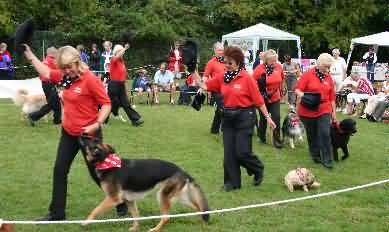
All the fun at the 2006 Summer Fair. At the Summer Fair we have a tremendous downpour just before starting and another just as we were packing up, but this did not have stop us having a great time.
IN CASES OF CRUELTY, NEGLECT OR IN AN EMERGENCY TEL: (24 HOUR)
|


 A
A
 Successful Quiz Night (Feb 2006)






 Wildlife Radio Tracking


|
|
||
|
|
||